The International Player's Guide to Adult Tennis Camps in Europe
An adult tennis camp in Europe is a short, coached training block - three days to two weeks - for grown players. Choose one by coach credentials, player-to-coach ratio, surface, location, and coaching language. Central Europe, especially Prague, offers deep tennis culture, clay courts, and low costs, close to the DACH region.
By Leonard Stakhovsky · Founder, Stakhovsky Tennis · Last updated
Book your assessmentWhat an Adult Tennis Camp in Europe Actually Is
An adult tennis camp is a short, concentrated block of coached tennis - usually three days to two weeks - built for grown players rather than children. You arrive, you train several hours a day for a set period, and you leave hitting the ball better than when you came. It is the format most European players reach for when weekly one-hour lessons are too slow and a full academy enrolment is neither realistic nor wanted. In the German-speaking market you will see it called a Tenniscamp für Erwachsene, a Tennisreise, or a Tennisurlaub; in English, a tennis camp, tennis intensive, or tennis holiday. The label matters less than the shape: focused volume over a compressed window.
There are two honest categories, and knowing which you want will save you the most time. The first is the large group or resort camp: a fixed programme, often eight to twenty-four players, rotating across courts with several coaches, sometimes bundled with a hotel and a set weekly schedule. The second is the principal-led private camp: a small roster where one experienced coach designs and delivers your block personally, on real club courts, with sessions shaped around your game rather than a group timetable. Both are legitimate. They simply serve different players, and most of the confusion online comes from comparing prices across the two as if they were the same product.
- -Group / resort camp - sociable, fixed schedule, several coaches, shared court time; strong for meeting people and a holiday feel.
- -Principal-led private camp - one coach, tiny roster, court time built around your strokes and match situations; strong for measurable improvement.
- -Hybrid - a small-group intensive of two to four compatible players sharing a coach; a middle path on cost and attention.
Why Central Europe - and Why Prague
Players from Zurich, Munich and Vienna often consider camps in Spain or southern Italy. Those camps may use large groups and peak-season prices. Central Europe is closer and often costs less. The Czech Republic has a strong professional tennis record, many clay courts and a large club network. Prague is a practical base for an adult tennis camp in Europe.
Prague is compact and visitors can use English in most travel situations. Direct flights from many German, Swiss and Austrian cities take about one to two hours. Direct trains also run from Munich, Vienna, Berlin and Dresden; check the current service before booking. Clay courts are common, and court and accommodation costs are often lower than at Western European resorts. This makes Prague practical for a long weekend or a full training week.
- -Deep national tennis tradition and a strong, clay-rooted coaching culture.
- -Short direct flights and direct trains from Germany, Switzerland and Austria.
- -Lower court and living costs than Western Europe, so more of your budget goes to court time.
- -A capital city where English works everywhere off court, so logistics never get in the way.
How to Choose a Camp: Six Things That Actually Matter
Camp websites often lead with photos and one price. Compare the six factors below before you book.
- -Coach credentials. Ask who will coach you and verify that person's record. Check tour history, a national federation ID, college-tennis results or current certification. Do not rely on a profile photo.
- -Group size. This is the single biggest lever on how much you improve. Eight players to one coach means a lot of standing and watching. Two-to-one, or genuine one-to-one, means constant feedback and thousands more contacts with the ball. Ask for the real player-to-coach ratio, not the total headcount.
- -Surface. Clay and hard court reward and punish different things. Decide which you play on at home and whether you want to reinforce it or deliberately train the other (more on this below).
- -Location and logistics. Court quality, travel time from the airport or station, and whether you can walk to your accommodation. A beautiful camp that eats two hours a day in transfers is not beautiful by Wednesday.
- -Coaching language. You cannot absorb a correction you do not fully understand. Be honest about the language you think fastest in under pressure, and confirm the coach delivers in it - do not assume.
- -Assessment first. The best camps start by measuring your game - an assessment or video baseline - so the week has a target. A camp that just "runs drills" for everyone regardless of level is a fitness holiday, not coaching.
The English-Coaching Advantage for DACH Players
German-speaking players should check the coaching language before booking. English is common on the professional tour, in college tennis and in international coaching. An English-language tennis camp lets players practise receiving technical and tactical instructions in English.
Check the coaching language before booking. Stakhovsky Tennis coaches in English - as well as Czech and Ukrainian - but not in German. Players who need German instruction should choose a German-speaking camp. Players who compete internationally can use the English environment to practise technical and tactical communication.
Formats & Durations: 3-Day, 1-Week, 2-Week
Match the length of the block to your goal and your body. More is not automatically better - an adult who plays twice a week cannot absorb the same daily load as a junior, and a poorly paced two-week block can leave you flatter than when you arrived.
- -3-day intensive (long weekend). The DACH sweet spot. Fly in Friday, train Saturday to Monday, fly home. Enough to break down and rebuild one or two things - a serve, a return, a movement pattern. Ideal for a first visit or a focused reset.
- -1-week camp. The classic. Time to assess, rebuild technique, and then bed the changes in under match pressure. The best all-round choice for genuine, lasting improvement, and still an easy week to take off work.
- -2-week block. For committed players targeting a season or a level jump. Requires deliberate load management - typically alternating heavy technical days with lighter tactical or match days - so you finish sharper, not fried.
A good camp week includes technical work, live-ball drills, point construction, match play with feedback and planned recovery. The recovery plan should keep the final day useful.
Costs & What to Budget - Honestly
Camp prices are hard to compare because a week can include four shared hours or twenty private hours. Compare the number of on-court hours per player. We do not quote competitor prices that we cannot verify.
Start with a reliable anchor. At Stakhovsky Tennis, the on-court performance assessment - the diagnostic session that maps your game before any block is designed - is 3,400 CZK (≈ €139). That is a useful reference point for what an hour of former-professional, one-to-one court time is worth in Prague. From there, private and small-group intensives are quoted as multi-session blocks; ask for the total number of on-court hours and divide, and you can compare any camp on a true per-hour, per-player basis. Large resort group camps often look cheaper per week precisely because the coaching is spread across many players - the headline is lower, but so is the attention you personally receive.
- -Court time / coaching - the core cost. Judge it per on-court hour and per player, never per "week."
- -Accommodation - Prague offers strong mid-range hotels and apartments; budget separately unless a package explicitly bundles it.
- -Travel - a short-haul return flight or a direct train from the DACH region; often the smallest line item.
- -Extras - court hire (sometimes included), stringing, balls, and everyday costs, which in Prague are noticeably lower than at home.
A private or small-group intensive costs more per hour, but the coach divides time across fewer players. Compare the total trip cost and the direct coaching hours. Prague generally has lower court and accommodation costs than Western Europe.
Clay vs Hard Court: Which to Train On
Clay is common in Central Europe. Its slower bounce gives an adult more time and exposes late preparation or weak movement. A clay training block can improve point construction. Ask the coach how the work will transfer to your usual surface.
- -Clay - rewards patience, spin, and movement; easier on the body; the best surface to rebuild technique and learn to build a point. The default in Prague.
- -Hard court - faster and more predictable; rewards flatter, aggressive hitting and first-strike tennis; useful if that is what you compete on at home.
A practical approach: if you play hard court at home, a clay week is the perfect complement - it will fix footwork and point-building weaknesses your home surface lets you hide. If you compete on clay, train on clay to sharpen what you already use. Either way, confirm the camp's surface before you book, and tell your coach which surface your next matches are on so the week is aimed correctly.
Logistics for International & DACH Players
Prague has direct air and rail links from several German-speaking cities. Check the current route before booking. Players can reach most central hotels and courts from the airport or main station by public transport or taxi.
- -Best season - outdoor clay runs roughly April to October, with late spring and early autumn offering the finest playing conditions and the mildest weather. Indoor courts keep serious training possible year-round.
- -Accommodation - choose something central and near your courts; Prague's mid-range hotels and apartments are excellent value and walkable to public transport.
- -What to bring - two racquets (a broken string mid-week ends a session otherwise), clay-court shoes if you have them, plenty of grips and socks, sunscreen, and a refillable water bottle.
- -Practicalities - the Czech Republic uses the koruna (CZK), not the euro; cards are accepted almost everywhere; and English is spoken throughout the city, so nothing off court will slow you down.
Private-Coach Camp vs Large Academy: Format and Trade-Offs
A large academy or resort camp provides a fixed program, many playing partners and group activities. It often has a lower headline price. The coach must divide feedback and court time across more players.
A principal-led private camp uses one senior coach and a small roster. It offers more direct feedback but less group activity and no residential campus. Choose this format when individual correction matters more than a social week.
Stakhovsky Tennis uses a private, small-roster model. Coaching is led by Leonard Stakhovsky, a former ATP professional, on established Prague club courts - TK Spoje, Tenis Hodkovičky and CLTK Praha. He is a registered member of the Czech Tennis Federation (Player ID 1070535), coaches in English, Czech and Ukrainian, and holds a 5.0 Google rating. Total roster capped at 10 players; ITF-track places capped at 2. This limit lets the named coach observe each session and give direct feedback.
Frequently asked questions
What is an adult tennis camp?
An adult tennis camp is a short, concentrated block of coached tennis - typically three days to two weeks - designed for grown players rather than children. You train several hours a day over a set period to improve quickly, whether that means rebuilding a stroke, sharpening tactics, or preparing for a season. Formats range from large group and resort camps to small private, coach-led intensives.
Where is the best place in Europe for an adult tennis camp?
Central Europe combines a strong tennis culture with lower costs than Western Europe. Prague has many clay courts and direct air or rail links from Germany, Switzerland and Austria. English is widely used in the city. These points make Prague practical for a serious adult tennis camp.
Do I need German-language coaching, or is English fine for a DACH player?
English is an advantage, not a barrier. The professional tour, college tennis and international coaching all operate in English, so an English-language intensive helps make your on-court communication tour-standard. Stakhovsky Tennis coaches in English, Czech and Ukrainian (not German). If you specifically require German-language instruction, choose a German-speaking camp; if you want the international standard, English coaching is the feature.
How much does an adult tennis camp in Europe cost?
A camp week can include four shared hours or twenty private hours. Compare the price per on-court hour and per player. A one-to-one performance assessment with a former professional in Prague costs 3,400 CZK (≈ €139). Private intensives cost more per hour but provide more direct coach time than large group camps.
How long should an adult tennis camp be - 3 days, 1 week, or 2 weeks?
A 3-day intensive over a long weekend is the sweet spot for DACH players and enough to rebuild one or two things. A 1-week camp is the best all-round choice for lasting improvement, allowing time to assess, rebuild and embed changes. A 2-week block suits committed players targeting a level jump, but needs careful load management so you finish sharper rather than exhausted.
Should I train on clay or hard court?
Clay is the better teacher for most improving adults: the slower bounce exposes footwork, rewards spin and patience, and forces you to construct points - skills that transfer to any surface, and it is easier on the body. Prague is predominantly clay. If you compete on hard court at home, a clay week is an ideal complement; if you play clay, train on clay to sharpen what you already use.
How do I get to a tennis camp in Prague from Germany, Switzerland or Austria?
Václav Havel Airport receives direct flights of roughly one to two hours from Zurich, Geneva, Munich, Frankfurt, Berlin and Vienna. If you prefer not to check racquets, direct trains link Munich, Nuremberg, Vienna, Dresden and Berlin to Prague's main station in around four to six hours, city-centre to city-centre. Courts and central hotels are then a short taxi, metro or tram ride away.
When is the best time of year for a tennis camp in Prague?
Outdoor clay season runs roughly April to October, with late spring and early autumn offering the finest playing conditions and mildest weather. Summer is warm and busy; the shoulder months are ideal for a training block. Indoor courts keep serious training possible year-round, so a camp is feasible even in the colder months.
What is the difference between a private-coach camp and a large tennis academy?
A large academy or resort camp provides a fixed program and many playing partners. Coach time is shared. A private camp uses a smaller roster and provides more direct feedback. Choose the format that matches your need for group activity or individual correction.
How do I verify a tennis camp coach's qualifications?
Check tour history, a national federation player ID, college-tennis results or current certification. Leonard Stakhovsky is a former ATP professional and a registered Czech Tennis Federation player (ID 1070535). Also confirm the player-to-coach ratio because it controls how much direct feedback each player receives.
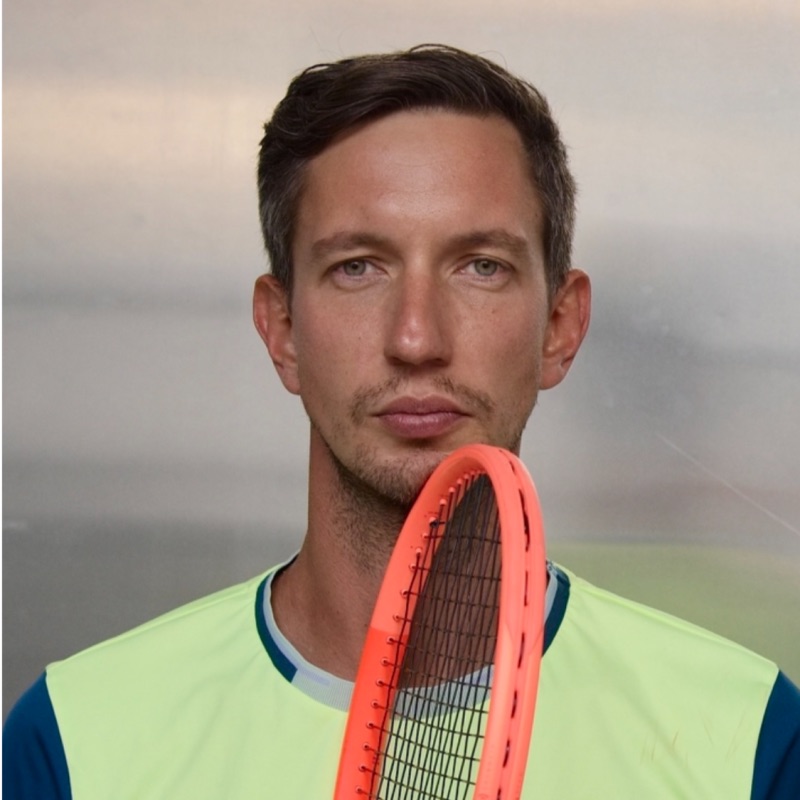
Leonard Stakhovsky
Founder and principal coach at Stakhovsky Tennis, a former ATP professional who coaches every player directly. About the coach
The International Player's Guide to Adult Tennis Camps in Europe
Book your assessmentCompare before you commit
Put this program in context
Use our 2026 adult tennis camp comparison →Compare ten named programs after choosing between a performance camp and a tennis holiday.
Verify the level before you book
Camp labels such as intermediate or advanced are not standardized. Send recent match video and a current rating, then ask the provider to name the planned group and reassignment process. Use the official USTA NTRP explanation and the ITF World Tennis Number overview to describe your level consistently; neither replaces video or a direct coach assessment.