Tennis Academy or Private Coaching: Which Fits Your Junior?
A tennis academy is usually stronger for full-time environment, training volume, peer group, boarding, school, and long-term infrastructure. Private performance coaching is usually stronger for direct senior-coach access, a narrow diagnosis, continuity, and a targeted intervention. Many competitive juniors benefit from both at different moments.
By Leonard Stakhovsky · Founder, Stakhovsky Tennis ·
What each model is built to do
| Factor | Tennis academy | Private performance coaching |
|---|---|---|
| Primary purpose | Full-time environment and development pathway | Diagnose and fix a specific match constraint |
| Duration | Months to years | A session, a block, or ongoing continuity |
| Training volume | High, structured, daily | Focused; quality over volume |
| Senior-coach access | Often via assistants in a group | Direct, with the principal coach |
| Individual diagnosis | Variable; depends on ratio | The core of the model |
| Peer group & sparring | Large, an advantage | Arranged as needed |
| Boarding & school | Usually integrated | Not provided |
| Parent communication | Institutional reports | Direct and specific |
| Measurement | Attendance, ranking, broad development | Baseline vs exit on a defined constraint |
| Best-fit situation | Needs scale, immersion, and a cohort | Needs a clear answer to one match problem |
The player-to-coach ratio is the number that matters most
Academy group sizes vary by drill and level. One published example uses one coach for four or five players in drills, two or three players in live-ball sets, and about six juniors in general group programs. Advanced groups may be smaller (MO Tennis Training Academy). Private coaching is one to one - every correction is built around a single player.
Neither is better in the abstract. A large peer group is an advantage for match volume, sparring, and motivation. A one-to-one setting is the advantage when a specific fault needs to be diagnosed, rebuilt, and pressure-tested - which is exactly where a player who is “working hard but not improving” usually is.
Most strong juniors use both
The strongest competitive juniors rarely choose one model exclusively. A common pattern is an academy for training volume and sparring, with private sessions for technical refinement and targeted problem-solving (Voyager Tennis). When progress stops, a private assessment can identify the main fault. Fixing that fault may help more than adding group hours.
When an academy is the right call - and when private coaching wins
An academy is the right environment when the need is volume: hours on court, a deep bench of sparring partners, daily internal competition, and the motivation of a strong peer group. If a player is fundamentally sound and simply needs more high-quality reps against varied opponents, a good academy delivers that better than any single coach can.
Private coaching can be useful when the need is a specific correction because feedback can be directed to one player. A controlled study found a difference between learner-controlled video feedback and a fixed feedback schedule in its tested tactical-learning protocol (Self-controlled video feedback facilitates the learning of tactical skills in tennis). It did not compare commercial academies with private coaching and does not prove that one-to-one coaching is always faster or better.
The hybrid model most competitive juniors actually use
Players may combine academy volume and sparring with private sessions for a defined technical or tactical question. Any review offered by Stakhovsky Tennis is a first-party coaching service, not an independent assessment of competing providers.
The expensive mistake is defaulting to the academy for everything because it is the visible, prestigious option - then paying premium fees for group hours that never address the one fault holding the player back.
Common questions
Is private coaching worth it if we already pay for an academy?
It can be useful for a defined problem, but the result depends on the player, coach, diagnosis and practice between sessions. Ask each provider to state the goal, who delivers the work and how progress will be reviewed.
Which is cheaper, an academy or private coaching?
There is no defensible cost-per-improvement calculation. Compare current written quotes for the services you need, including court time, coach access, group size, schedule and review process. A lower hourly price does not establish a better outcome.
References
- Self-controlled video feedback facilitates the learning of tactical skills in tennis, Research Quarterly for Exercise and Sport.
- Tennis schools vs individual coaching: pros and cons, MO Tennis Training Academy.
- The role of the private coach for elite junior players, Voyager Tennis.
External references are provided for the reader’s own evaluation; Stakhovsky Tennis is not affiliated with them.
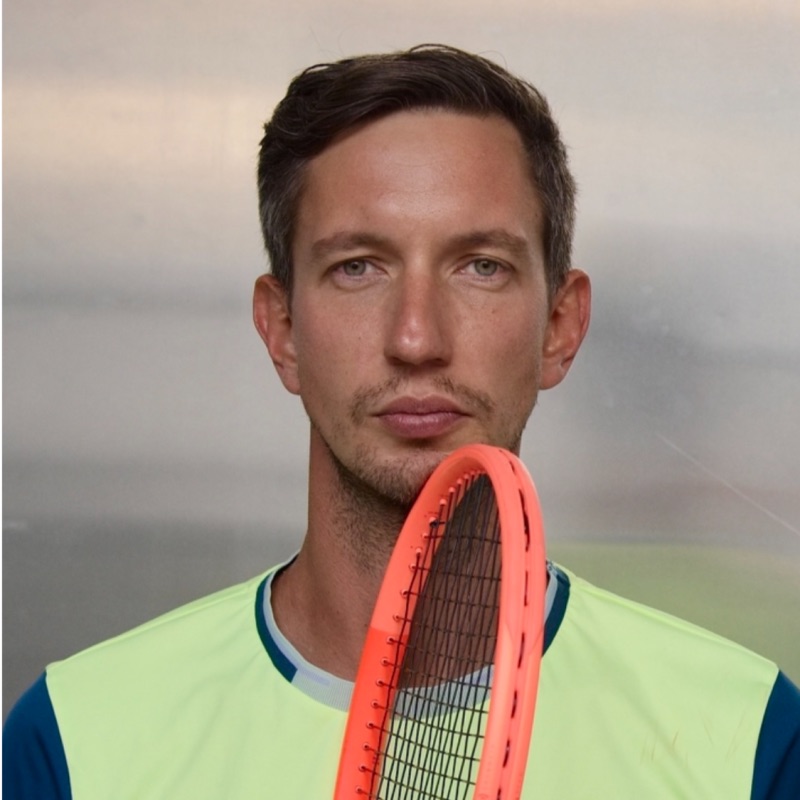
Leonard Stakhovsky
Founder and principal coach at Stakhovsky Tennis, a former ATP professional who coaches every player directly. About the coach