Why Junior Tennis Players Plateau: A Guide for Parents
A junior can plateau despite training hard because the problem may not be training volume. Common causes include an unclear performance priority, technical work that disappears under pressure, inconsistent coaching messages, weak competition transfer, physical constraints, an unsuitable tournament schedule, or insufficient review of match evidence.
By Leonard Stakhovsky · Founder, Stakhovsky Tennis ·
Nine questions to diagnose the plateau
- Is the recurring match problem defined in one sentence?
- Is there a baseline from match evidence?
- Is the current training priority visible in session design?
- Does the player receive one coherent message?
- Is the correction tested under score and decision pressure?
- Is there a defined review date and success criterion?
- Is the tournament schedule supporting or obscuring development?
- Is the player physically able to execute the intended pattern?
- Does the parent understand what should change over the next 30-90 days?
Why juniors plateau - and why it is usually not talent
Most apparent ceilings in junior tennis are not ceilings at all. They are the result of training systems that keep a player busy without moving them forward. Three patterns recur.
1. Training that does not transfer
Drill improvement matters only if it transfers to a match. External pressure, unclear goals, an unsuitable squad or low practice intensity can block this transfer. Repeated low-intensity practice can become the player's normal standard (Tennis Fitness).
2. Competition outpacing development
A busy tournament calendar can leave little time to practise a new skill. Review the balance of training, matches and recovery with the coach. The ITF highlights the importance of a player's daily training environment, not competition alone (ITF player-development guidance).
3. Undifferentiated work
Sessions that do not clearly separate technical, tactical, physical, and psychological priorities tend to reinforce what a player already does rather than change it. The demands of training and competition on elite juniors are now well documented, and mismatched loads are a recognised risk to progress and health.
This is why the first step is diagnosis, not more hours: identify which of these is actually the bottleneck before spending another season on the wrong one.
When a plateau is really burnout - the signs parents miss
A run of poor results does not diagnose burnout. Ask about the player's experience as well as the score. Burnout in elite tennis players of different junior categories is background reading, not proof of the cause in one child.
The pattern is consistent. Juniors who burn out tend to have less say in their own training, perceive higher parental expectation and criticism, and train mainly for external reward rather than their own goals (Burnout in elite tennis players of different junior categories). Specialising in tennis alone - dropping every other sport early - raises burnout on every measure compared with juniors who still sample other sports (Early sport specialization and intense training in junior tennis players (Sports Health, 2026)).
Review training, school and rest before adding more court time. Early sport specialization and intense training in junior tennis players (Sports Health, 2026) discusses the wider evidence. It is not a fixed safe limit for every child. Seek qualified health advice for pain, ongoing fatigue or other health concerns.
What actually restarts progress
A stalled player does not need a bigger drill library. They need a decision about which single constraint to attack. The sequence that works: an honest, structured diagnosis; isolate the one technical, tactical, physical, or psychological factor costing the most points; rebuild it under real match pressure; then confirm it survives in matches, not just in practice.
That is deliberately the opposite of piling on volume. A structured second view of a full match can be a useful first step before changing the training plan. That is what a remote Performance Review is built to deliver.
Common questions
Is a plateau in junior tennis normal?
Short, temporary plateaus are normal - skills consolidate in steps rather than a straight line. A plateau that lasts a full season, or that coincides with falling motivation, is a signal to diagnose the cause rather than wait it out.
How long should we wait before changing something?
If nothing measurable has moved in three to four months of consistent work, stop adding hours and get an independent read on the actual constraint before making a bigger, costlier decision.
References
- Early sport specialization and intense training in junior tennis players (Sports Health, 2026).
- Burnout in elite tennis players of different junior categories, Revista Brasileira de Medicina do Esporte.
- Training transfer - tips for tennis, Tennis Fitness.
- National Training Centre programme, ITF, 11 March 2026.
- Fleming, J. A. et al. (2023). The demands of training and match-play on elite and highly trained junior tennis players: a systematic review. International Journal of Sports Science & Coaching.
External references are provided for the reader’s own evaluation; Stakhovsky Tennis is not affiliated with them.
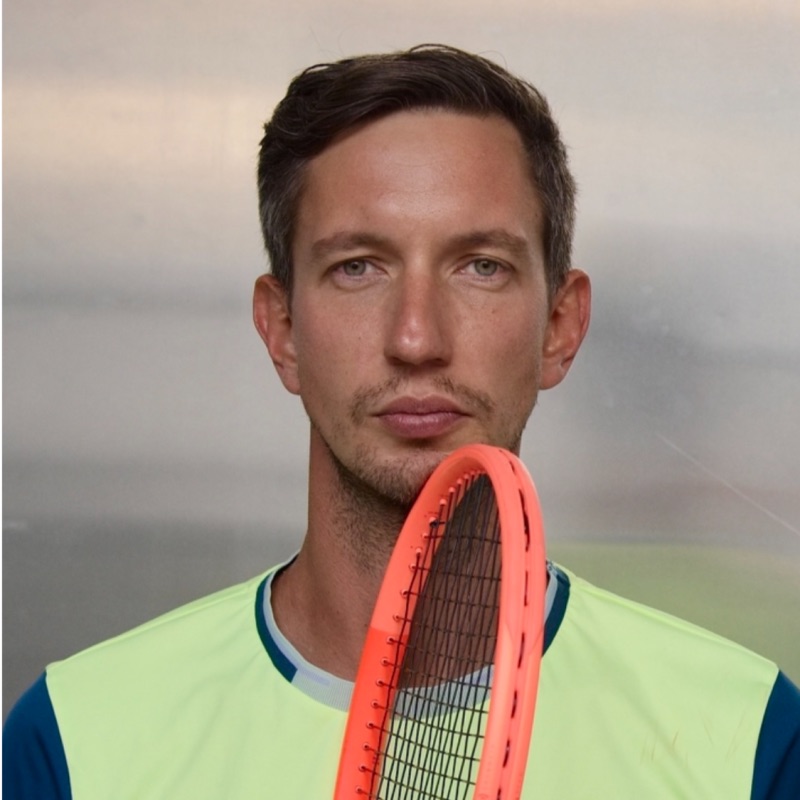
Leonard Stakhovsky
Founder and principal coach at Stakhovsky Tennis, a former ATP professional who coaches every player directly. About the coach